
Basilica de la Soledad Oaxaca: Visitor Guide
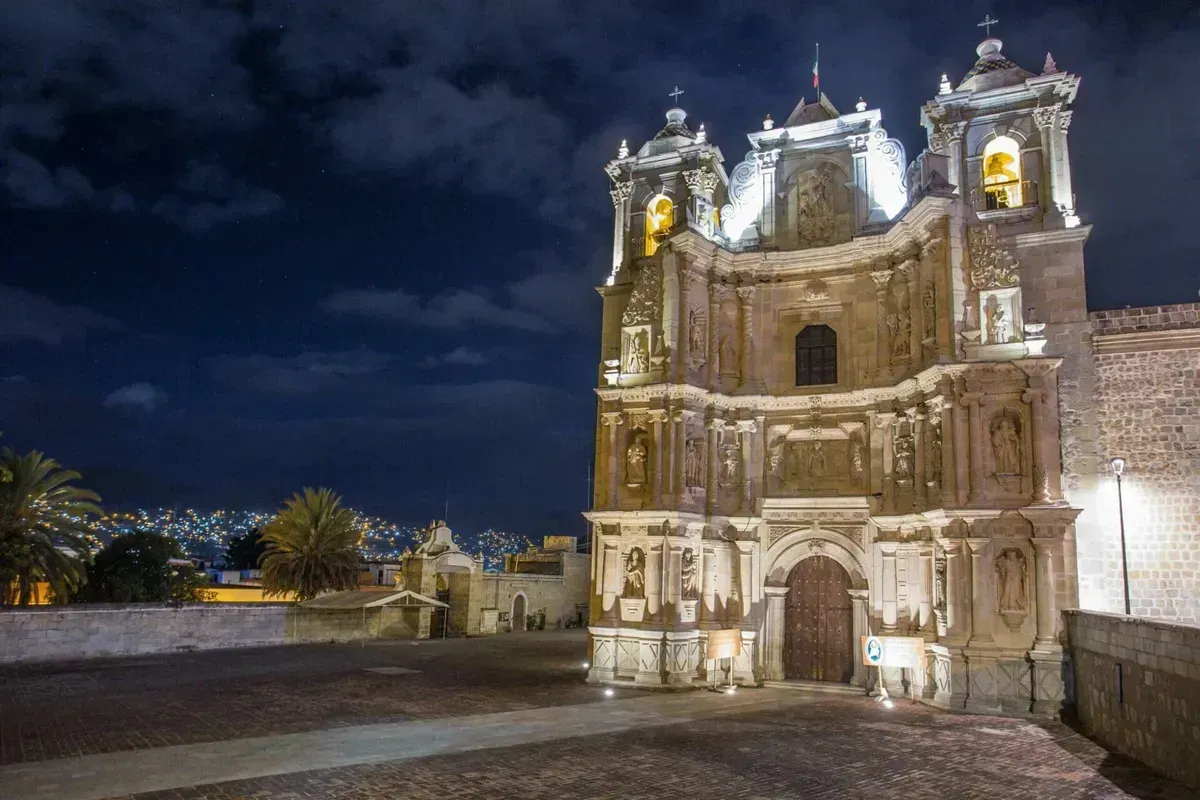
The Basilica de Nuestra Senora de la Soledad is one of the most important religious landmarks in Oaxaca, Mexico. Dedicated to the Virgin of Solitude, the patron saint and protector of the city, this 17th-century church combines Baroque grandeur with deep local devotion. It sits within Oaxaca’s Historic Center, which UNESCO declared a World Heritage Site in 1987. Together with the Church of Santo Domingo de Guzman, it forms the core of Oaxaca’s colonial architectural heritage.
Whether you are drawn by its striking stone facade, the legendary origin story of its patron saint, or simply looking for an unforgettable stop on your walking tour of Oaxaca, the Basilica de la Soledad deserves a place on your itinerary.
History and Legend of the Virgin of Solitude
The story behind the basilica is one of Oaxaca’s most cherished legends. According to tradition, a muleteer traveling from Veracruz through Oaxaca noticed that an extra mule had joined his caravan somewhere along the way. When the group stopped and the bags were removed, the mysterious mule collapsed and died on the spot — the very site where the basilica stands today.
Inside the bags, the muleteer discovered an image of the Virgin Mary in a sorrowful pose with Christ at her feet, along with a legend reading “The Virgin of Solitude at the feet of Christ.” The event was interpreted as a divine sign, and a temple was built to honor it.
Construction of the present basilica began in 1682 under the supervision of Bethlehem friar Sebastian de San Felipe. The building was completed in 1690, and Bishop Isidro Sariñana y Cuenca consecrated it in 1697. The current facade was installed in 1718, financed through the support of Bishop Angel Maldonado.
Over the centuries, devotion to the Virgin of Solitude only grew. She received a pontifical coronation on January 18, 1904, and the sanctuary was elevated to basilica status in 1960. In 1979, Pope John Paul II visited the site, further cementing its importance in Mexican Catholic tradition.
Baroque Facade and Architecture
The facade of the Basilica de la Soledad is one of the finest examples of Oaxacan Baroque architecture. It is built in the form of a screen or retablo, composed of four levels and seven vertical rows, carved from the region’s characteristic yellow quarry stone.
What to look for on the facade
- First level: A semicircular arch flanked by columns with Doric capitals. Niches hold stone sculptures of Saint Peter, Saint Paul, Saint Augustine, and Saint Rose of Lima — the first saint of the Americas.
- Second level: A carved relief depicting the Virgin Mary kneeling in sorrow at the foot of the Holy Cross, with the city of Jerusalem sketched in the background. Two angels flank the scene — one holds a cloak bearing the face of Christ.
- Third level: The Annunciation scene, with the Archangel Gabriel. Sculptures of Saint Nicholas of Bari and Saint Nicholas of Tolentino appear on the sides.
- Upper pediment: The Assumption of the Virgin Mary into heaven.
Additional figures along the facade include Santa Ana, San Joaquin, San Juan Evangelista, Santa Lucia, San Sebastian, and Santa Isabel.
Structural design
The basilica was engineered to withstand Oaxaca’s frequent seismic activity. It features two barrel vaults and an octagonal dome covered with fine tiles. Two bell towers rise behind the facade, adding to the imposing silhouette. The main entrance is built in an arch shape that provides both aesthetic appeal and structural reinforcement against earthquakes.
Inside the Basilica
The interior shifts from Baroque to Neoclassical. During the 18th century, the internal altarpieces were rebuilt in the Neoclassical style. Paintings of European origin from the same period line the walls.
The centerpiece is the niche on the main altar housing the statue of the Virgen de la Soledad. The image, dressed in garments sewn by the faithful over the centuries, depicts the Virgin with her hands clasped in prayer. Each dress is a testament to the love and devotion the people of Oaxaca feel for their patron saint.
A small on-site museum details the history of the basilica, the story of how the image arrived, and the broader religious and cultural development of Oaxaca.
The Atrium and Surroundings
The basilica’s atrium is spacious and paved with Oaxaca’s traditional green quarry stone. At the entrance stands an atrial cross carved from pink quarry with lily flowers — a 21st-century addition that harmonizes with the colonial setting.
Surrounding the basilica you will find:
- Jardin Socrates: A pleasant garden directly adjacent to the church, a good spot to rest and people-watch.
- The dance plaza: An open square where you may encounter urban musicians playing traditional regional music.
- The Municipal Palace (formerly the Ex-Convent of San Jose and later the Convent of the Augustinian Mothers), which has served various civic roles since 1867.
The Famous Ice Cream Street
No visit to the Basilica de la Soledad is complete without a stop at the small market lining the street beside the church, locally known as the ice cream street. Vendors here sell nieves (traditional Oaxacan sorbets and ice creams) in dozens of flavors, including:
- Nieve de tuna — prickly pear cactus fruit, refreshing and mildly sweet
- Leche quemada — burnt milk, rich and caramel-like
- Passion fruit, mezcal, mamey, and even chapulines (grasshoppers)
These artisanal frozen treats are made fresh daily and cost just a few pesos per serving. It is one of Oaxaca’s most beloved street food traditions and the perfect way to cool off after exploring the basilica.
Practical Visitor Information
| Detail | Information |
|---|---|
| Address | Av. de la Independencia 107, Centro, 68000 Oaxaca de Juarez, Oaxaca |
| Coordinates | 17.063364, -96.729898 |
| Telephone | 951 516 5076 |
| Admission | Free |
| Mass schedule | Monday through Sunday at 7:00 AM, 12:00 PM, and 6:00 PM |
| Main festival | December 18 (Feast of the Virgin of Solitude) |
| Museum | Open to visitors inside the basilica complex |
How to get there from the Zocalo
The Basilica de la Soledad is about a 10-minute walk (six blocks) west of the Zocalo along Calle Independencia. Head west on the pedestrian-friendly street and you will see the basilica’s stone facade rising ahead. The walk itself is pleasant and takes you through the heart of the Historic Center.
No special transport is needed — walking is the best way to reach it, and it pairs naturally with a broader walking tour of Oaxaca’s colonial landmarks. For more on exploring Oaxaca’s Historic Center, see our complete Oaxaca travel guide.
December 18: The Festival of La Soledad
Every year on December 18, the city celebrates the feast day of the Virgen de la Soledad with processions, live music, fireworks, and special masses. Thousands of pilgrims and locals gather at the basilica to honor Oaxaca’s patron saint. If your visit coincides with this date, expect a vibrant and deeply moving cultural experience.
More Landmarks to Explore
If the Basilica de la Soledad inspires your interest in Oaxaca’s colonial architecture and religious heritage, consider visiting: