
Zapotec Civilization: Culture, Gods & History
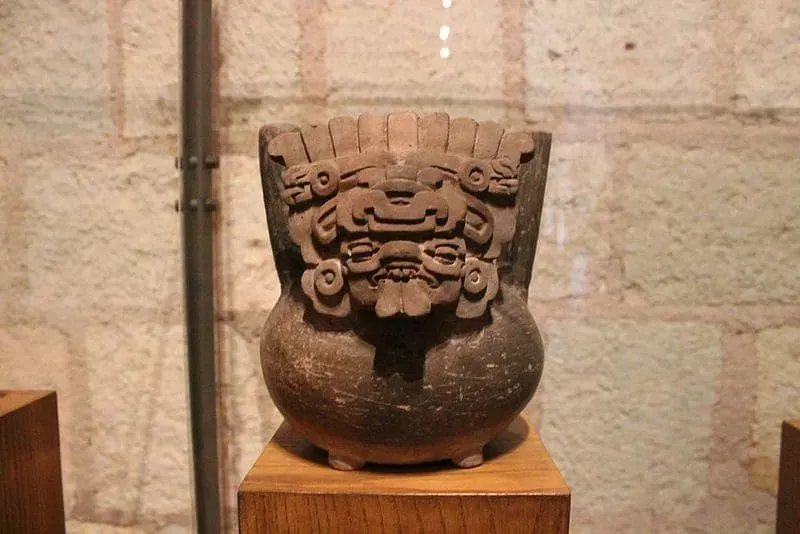
The Zapotec civilization is one of the most important in all of Mesoamerica, flourishing in the Oaxaca Valley where they conquered territory and built monumental cities like Monte Alban and Mitla. They managed to establish an intricate civilization with great technological and commercial advances thanks to their ability to interact with other cultures. This guide covers everything from their cities and gods to their traditions that remain alive in Oaxaca today.
Important Cities of the Zapotecs
The Zapotecs were an important culture in southern Mesoamerica.
They began to thrive in the pre-Hispanic period, but it was not until the classical period, between 250 A.D. and 900 A.D. that they saw their greatest boom.
The Zapotecs were baptized that way by the Aztecs. In Nahuatl «Tzapotéecatl» means: Zapote Village.
However, in their language, the Zapotecs were called «Be’neza» which means «people of the clouds».
This is because its main city, Monte Albán, was on a hill and because of its height, its inhabitants lived among the clouds.
They settled in the Oaxaca Valley and, thanks to an intricate trading system, managed to dominate several areas of what is now the state of Oaxaca.
They had settlements in areas they called:
- Del Valle
- De la Sierra
- Southern
All these territories belonged to the same Zapotec people.
As mentioned before, Monte Albán was its main city.
Currently, the archaeological zone of Monte Albán is located at 10Km from the city of Oaxaca.
This city was built on top of a hill to gain an advantage over enemies approaching from the valley.
Thanks to the height, the Zapotecs were not taken unaware because they could see them from a distance.
The city of Monte Albán had pyramidal buildings for sacred rituals, tombs, and markets.
Their organization also revolved around religious activities, there were areas of the city intended for housing the rulers who were themselves: priests, government officials, and for the rest of the inhabitants.
On the other hand, Monte Albán was a modern city. The layout of its buildings coincides with different astronomical phenomena.
At the same time, the J building of the archaeological zone seems to have been an observatory and its orientation coincides with the Constellation of Orion.
In terms of water supply, the city had an irrigation system for crops, as well as underground cisterns to reserve water for the inhabitants.
Another important city for the Zapotecs was Mitla.
This city was located in the south of the Oaxaca Valley.
The city was distinguished by its ornate buildings and located around the squares.
This city became the main one of the Zapotecs around 900 A.D., because, due to a commercial crisis, the inhabitants of Monte Albán would be forced to emigrate to look for other opportunities.
Finally, with the arrival of the Spaniards, the Zapotecs and their culture were conquered.
It is estimated that this happened between 1522 and 1527.
However, after the conquest, the Zapotecs continued to thrive in the Oaxaca region.
The customs and traditions of their ancestors are preserved today.
Important Activities
The Zapotecs were great merchants.
Much of its cultural prosperity was due to trade with the Olmecs on the southern Gulf coast.
As a primary activity they were engaged in:
- Growing corn, beans, squash, coffee, wheat, and sugar cane
- As well as hunting, fishing, and gathering
When these primary products were made, they could trade with other cultures.
This was what managed to spread them throughout the territory and to establish cities and a system to govern themselves.
However, it is estimated that around 800 A.D., the Zapotecs suffered a severe economic crisis.
It appears that trade channels with the Olmecs were lost, so the city of Monte Albán declined and was abandoned.
After this, Mitla would become the most important city for the Zapotecs, although they would not see a splendor as great as before.
The Social Organization of Zapotecs
The Zapotecs were governed by a system of pyramid classes.
Those at the top enjoyed far more privileges than those at the bottom of the pyramid.
In turn, that privileged position was reserved for the minority.
- Rulers and priests: those who ruled over the Zapotecs, in turn, were priests in charge of the worship of the gods to ensure the prosperity of the people.
- Nobles: caciques, high warriors, and government officials, important for political organization and war.
- Merchants: because of the economic benefits they provided, they were provided with special privileges.
- Artisans and peasants: this was the majority of the Zapotec population and they were in charge of working to supply the cities.
- Slaves: This item had no rights, they were prisoners of war or criminals who were used to working without benefits of any kind.
For a long time the social organization of the Zapotecs was theocratic, that is, it revolved around religious activities.
That is why the rulers were also priests and their activities were governed by the region.
However, as culture flourished, they began to rely more on military organizations.
Through war, cities were provided with tribute, slaves, and resources.
In turn, the Zapotecs had two calendars:
- Yza calendar: a solar calendar of 365 days, divided into 18 months of 20 days. This calendar was used to carry crops.
- Piye Calendar: A 260-day solar calendar, divided into 13 months of 20 days. This calendar was used for religious purposes and helped to name newborns.
The Zapotecs and their culture were not left behind in writing. The Zapotec language had about 100 and 300 different glyphs.
Handwriting samples have been found on stones and earthenware, shells, bones, ceramics, and skin.
Although it is also believed that they came to write in more flimsy materials such as paper.
Zapotec codices were written with colorful hieroglyphics on deerskin.
In these codices are preserved news of the pre-Hispanic peoples, as well as foundational stories of the peoples among other myths and diverse legends.
The Importance of Religion in Zapotec Culture
Zapotec religion was the central axis of daily life and was intimately linked to the calendar, agriculture, and natural phenomena. Zapotec priests, who held high social status, were the intermediaries between the gods and the people, and their influence extended to politics and the economy. Rituals and ceremonies were conducted to honor the gods and ensure their favor, which was considered crucial for the survival and prosperity of their society.
Duality in Zapotec Divinity
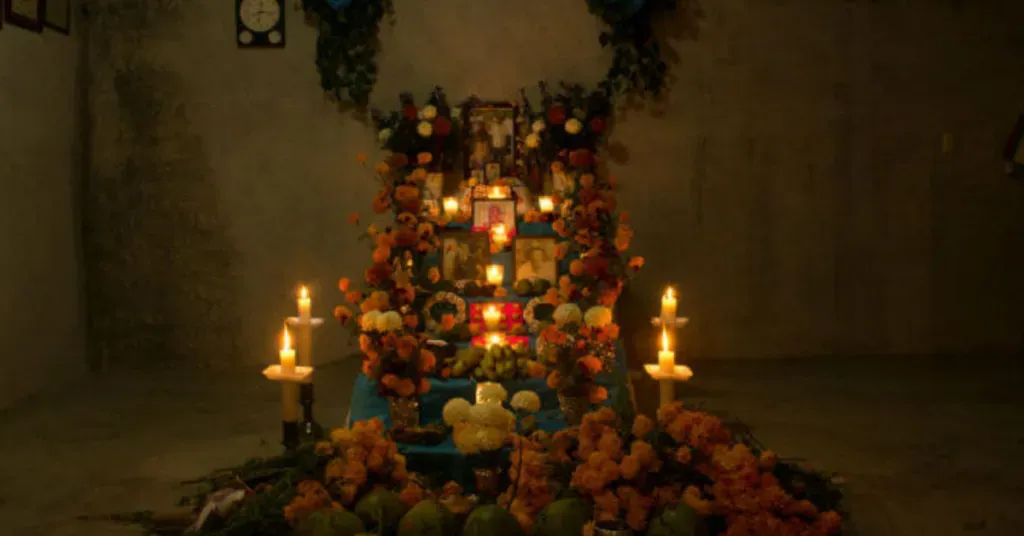
A distinctive feature of Zapotec mythology was the duality present in its deities. Many of their gods had both masculine and feminine aspects, reflecting the importance of balance and harmony in the universe. This duality also manifested in the concept of life and death, creation and destruction, which was inherent in their worldview and nature. Zapotec priests taught that worship of these opposing forces was fundamental to maintaining cosmic order and the cycle of life.
Artistic Representations of the Gods
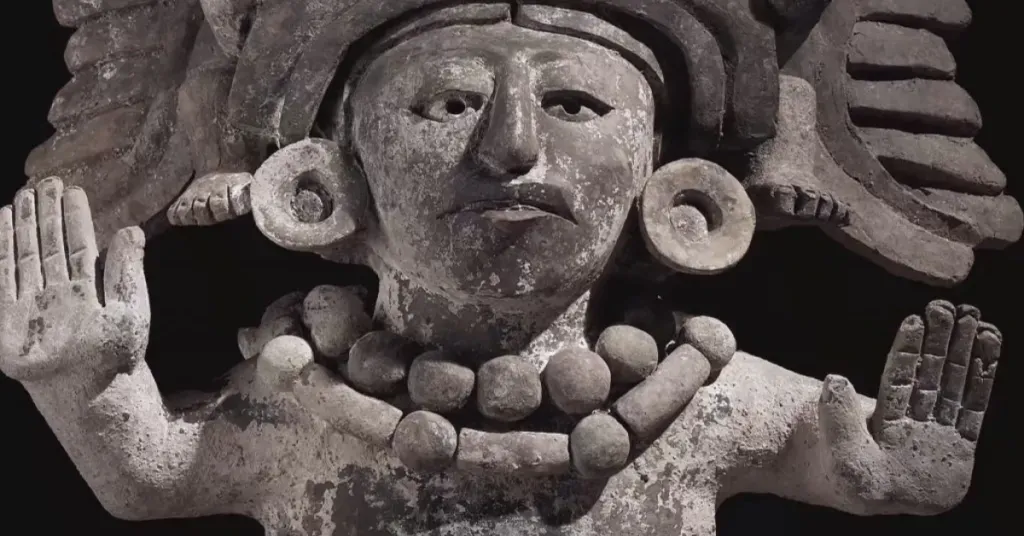
The Zapotecs depicted their gods through impressive artistic works. These representations were found in murals, ceramics, jewelry, and notably in large stelae and sculptures endowed with rich symbolism. Often, the gods were shown with animal attributes, such as jaguars or snakes, which highlighted their associations with certain forces of nature or supernatural powers. These works of art were not mere decorations but objects of power that acted as a bridge between the earthly and the sacred, ensuring communication and the favor of the gods.
Gods of the Zapotecs and their culture
The Zapotecs were polytheists, meaning that they worshipped more than one god. They had many, but some of them were:
- Xipe Tótec: god of agriculture, disease, and spring
- Pitao Copycha: sun god
- Pitao Cozobi: god of corn
- Quetzalcóatl: lord of the winds (minor deity in Zapotec culture, although it is important to mention it as a constant figure in various Mesoamerican cultures).
- Pitao Cocijo: god of rain and storm
- Pitao Pezeelao: god of death and the underworld
- Pitao Paa: god of commerce (they needed to have a deity for the activity that had brought them greater prosperity).
Cocijo: The Rain God
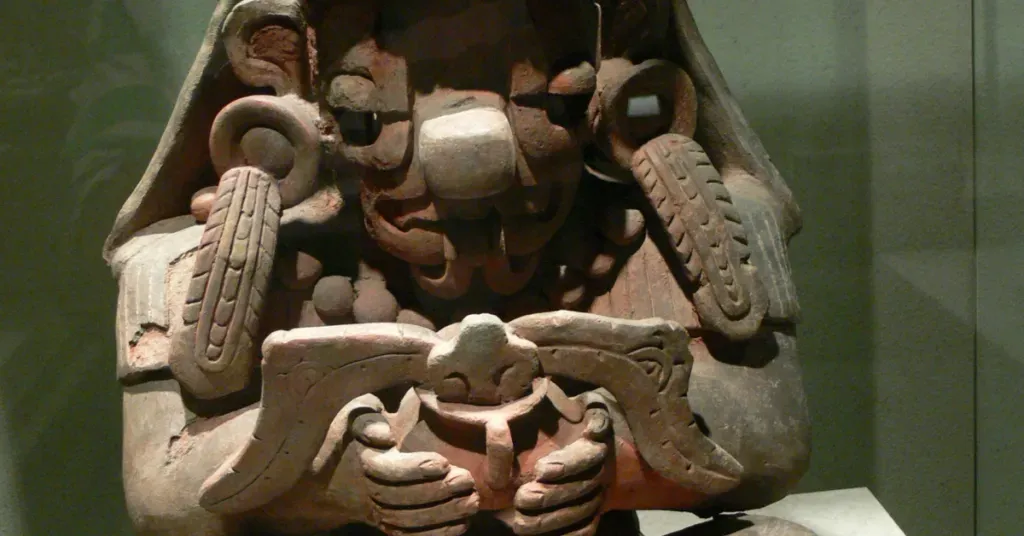
Cocijo is one of the most revered divinities in Zapotec mythology. Often depicted with attributes of a reptile, he symbolizes rain, lightning, and thunder. He was essential for agriculture, as he provided water for crops, and therefore his rituals were of vital importance to ensure good rains and, consequently, good harvests. It is said that Cocijo created humans from clay, endowing them with life with his «vitalizing lightning» in an act that demonstrates his connection as a creator god.
Pitao Cozobi: God of Maize
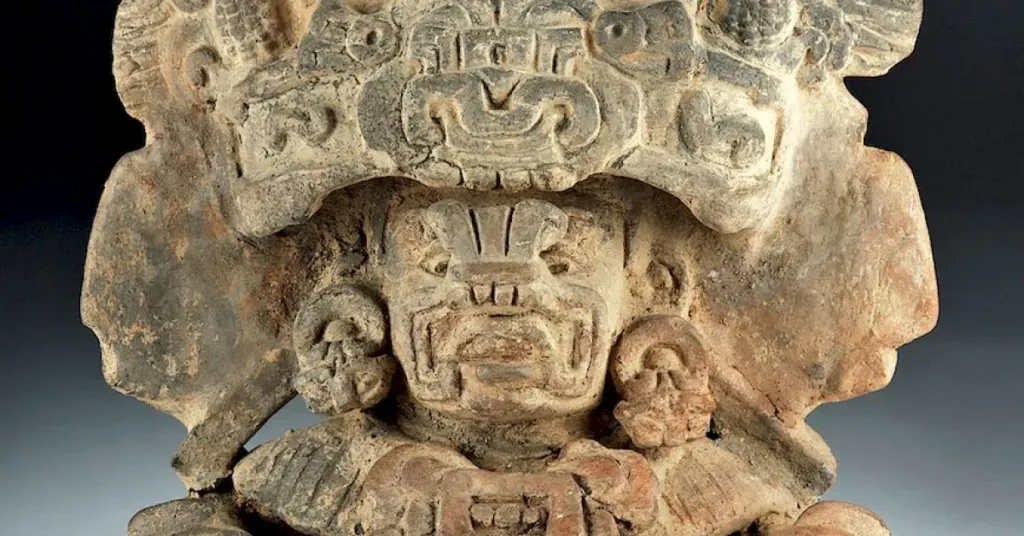
In a land where maize was more than a crop, practically the basis of existence, Pitao Cozobi had a central place in the hearts of the Zapotecs. Considered the god of maize, he represented life and fertility, ensuring the people’s food supply. Festivities in his honor were filled with dances and offerings as a petition for a bountiful harvest. To this day, maize remains a central element in the diet and culture of Oaxaca, reflecting the enduring legacy of Pitao Cozobi.
Copijcha: God of Death
The cycle of life and death played a transcendental role in Zapotec cosmology; Copijcha, the lord of the underworld, ruled over the latter. His cult ensured transit and protection in the afterlife. Unlike the dark deities of other cultures, Copijcha was also seen as a god of transformation and renewal, guiding souls towards regeneration. Zapotec funeral traditions reflected a deep respect and veneration for this guardian of the spiritual world.
Nahuales and Tonales
Zapotecs in their culture used to assign totemic animals to children.
On the day they were born, the «Tonal» rite was performed, which involved spreading ash around the newborn’s house and the imprint of the animal that was marked would be its totem pole.
That animal would represent him for life.
In turn, they believed in the «Nahuals».
Sorcerers who took advantage of their totem to become animals at night and do evil.
Also, their dead and their ancestors were very important to the Zapotecs.
So, they had an important cult to them.
Popular Zapotec Legends and Myths
The Legend of the Sun and the Moon
One of the most captivating stories of Zapotec mythology is the legend of the Sun and the Moon. It is said that, at the dawn of time, the sun and the moon were lovers whose love was so intense that it illuminated the entire sky. The other gods, fearing that their unified light could consume the world, decided to separate them, creating day and night. However, their eternal love endures in eclipses, moments when it is said that they briefly reunite so that their passion continues to live in the hearts of mortals.
The Myth of the Creation of the Zapotecs
The story of the Zapotecs’ origins is fascinating. In the creation myth, the gods emerged from the primordial chaos and began to shape the world. As in many other mythologies, the gods created humans, but in the Zapotec version, these first beings were imperfect and were replaced by others made of maize, who are the direct ancestors of the Zapotecs. This account emphasizes the intrinsic relationship between humans and maize, an essential element for the survival and culture of the Zapotecs.
Traditions and Festivals
The Zapotecs and their culture had multiple religious rites.
Many are preserved today but have resigned themselves to accord with the Catholic religion.
In turn, the pre-Hispanic symbols are preserved and are forms of identification of the Zapotec people.
These are some Zapotec traditions:
- Xandhu: This is the day of the Zapotec dead. The celebration begins on October 22 with prayers to ask the dead to visit the homes of their relatives who are still alive on November 1. It is a time to remember the deceased as well as to sympathize with neighbors and friends who have lost someone in the year.
- Guelaguetza: This is the most important festival in Oaxaca. In Zapoteco, it means to participate by cooperating. This feast arises as a veneration to the Corpus of the Church of Carmen del Alto. Villages from the eight regions with traditional dances participate.
- Candles: the candles began to be made by the Zapotec peoples after the conquest. They are handmade with beeswax and decorated with wax flowers. They were used to offering the patron saints and in reality, because of their ritual meaning, they were not for sale properly, the artisans gave them to their relatives or exchanged them for material goods.
- Dance of the Feather: this dance emerges as a way to recount the facts of the conquest. It is of Zapotec and Aztec origin and counts act by act, with dialogues, music, and dance, the facts of the conquest. It is usually the dance that closes the Guelaguetza.
The Influence of Zapotec Mythology on Current Culture
The Role of Zapotec Gods in Modern Celebrations in Oaxaca
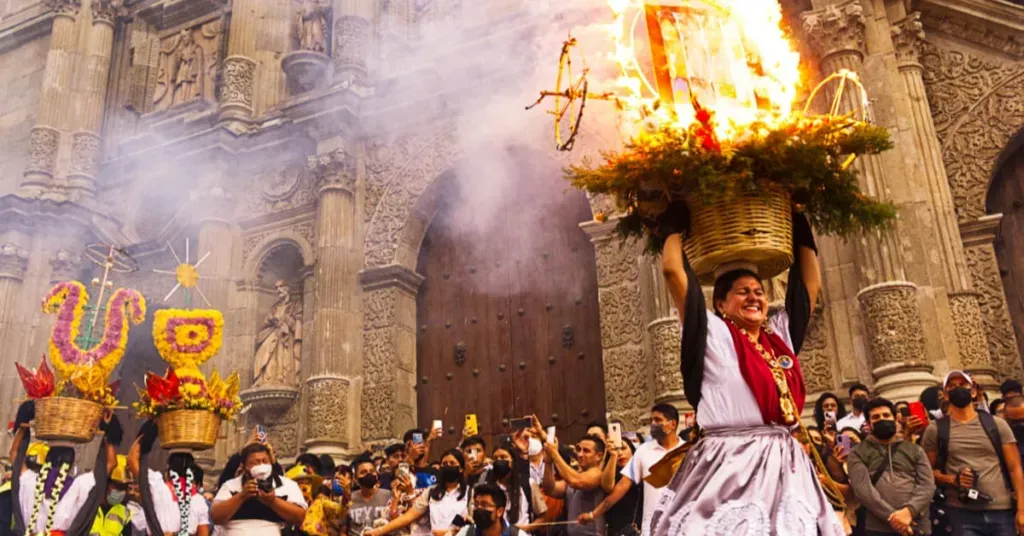
Zapotec mythology continues to play an important role in today’s festivities in Oaxaca. For example, the celebrations of the Guelaguetza, which take place every year, have roots in ancient ceremonies in honor of the Zapotec gods for abundance and harvest. To plan a visit around these celebrations, consult our Oaxaca travel guide. In addition, various deities are invoked and remembered in local events, such as patron saint festivals and agricultural rituals, where ancient Zapotec rites blend with Catholic practices, evidence of the cultural synergy that remains alive.
Zapotec Mythology in Oaxacan Literature and Art
Oaxacan artists and writers continue to find inspiration in the rich legends of the Zapotecs, allowing these ancient stories to endure and be reinterpreted. Zapotec mythology permeates contemporary literature, visual art, and performances, with works that reimagine its themes and characters within modern contexts. These works not only honor an ancestral heritage but also serve as a tool for reflecting on cultural identity and the legacy of the indigenous peoples of Oaxaca.
Conclusions on Zapotecs and their Culture
The Zapotec culture was very important in pre-Hispanic history. They managed to cultivate and trade their raw materials with other peoples, which gave them great wealth.
At the same time, they had established an organized religious, political, and social system that allowed them to establish themselves in various areas under the same worldview.
Without a doubt, the Zapotecs were a civilization that stood out for its achievements.
Through their gods like Cocijo, the god of rain, and Pitao Cozobi, the god of maize, we discover the reverence and respect that the Zapotecs had for the natural elements. Their rituals, customs, and beliefs continue to have a significant impact on the culture and traditions of the Zapotec people in Oaxaca to this day.
Without a doubt, Zapotec mythology is a fascinating study of faith, history, and culture that remains a constant legacy of this ancient people.
Learn more about Oaxaca and its ancient heritage:
- Monte Alban: Complete Visitor Guide
- Mitla Ruins: City of the Dead
- Indigenous Languages of Oaxaca
- Regions of Oaxaca and their customs and traditions
Frequently Asked Questions
Who were the Zapotecs?
The Zapotecs were an ancient pre-Columbian civilization that mainly inhabited the region now known as the state of Oaxaca in Mexico. This civilization, one of the oldest and most significant in Mesoamerica, is known for its impressive architecture, writing system, and rich pantheon of gods and myths.
Why was religion of great importance in Zapotec culture?
Religion was central in the lives of the Zapotecs because it governed much of their daily existence and rituals. The Zapotecs believed in the existence of many gods, each of whom exerted influence over different aspects of life and nature. The gods were honored and appeased with various rituals and festivities to ensure the harmony and well-being of the people.
Who was Cocijo in Zapotec mythology?
Cocijo was the God of rain in Zapotec mythology and was considered one of the most important deities. He was attributed power over rain, lightning, and thunder. Often associated with fertility and agriculture, sacrifices were offered to ensure rain and good harvests.
How is duality represented in Zapotec divinity?
In Zapotec cosmology, duality is a central concept in divinity. The gods often have dual aspects, reflecting both beneficial and destructive characteristics. For example, Cocijo, the god of rain, is associated with both favorable rains that nourish crops and destructive storms and floods.
What do artistic representations tell us about Zapotec gods?
Artistic representations of Zapotec gods provide us with a window into their religious beliefs and how they viewed the world. Through them, we can understand the different roles and characteristics attributed to each god, as well as the importance of certain symbols and natural elements in their cosmology.
What is the legend of the Sun and the Moon in Zapotec mythology?
The legend of the Sun and the Moon is a popular Zapotec myth. It is said that, at the dawn of time, the sun and the moon were lovers whose love was so intense that it illuminated the entire sky. The other gods, fearing that their unified light could consume the world, decided to separate them, creating day and night. Their eternal love endures in eclipses, moments when it is said that they briefly reunite.
How has Zapotec mythology influenced the current culture of Oaxaca?
Zapotec mythology has left a lasting influence on the culture of Oaxaca, from folk traditions and festivities to art and literature. Although many ancient beliefs and religious practices have disappeared, certain aspects of Zapotec cosmology still endure. This influence can be seen, for example, in the annual celebration of the dead, which reflects aspects of ancient Zapotec beliefs in the afterlife.
How was Pitao Cozobi, the god of maize, represented in Zapotec mythology?
Pitao Cozobi, the Zapotec god of maize, was one of the most revered in Zapotec civilization, as maize was the primary food source. He was generally depicted with maize cobs and associated with fertility and life. Farmers paid homage to him to ensure abundant harvests.
What is the story of the myth of the creation of the Zapotecs?
The myth of the creation of the Zapotecs tells that the gods emerged from the primordial chaos and created the first humans, but these were imperfect and were replaced by others made of maize, who are the direct ancestors of the Zapotecs. The Zapotecs considered themselves direct descendants of the gods, who had created the first humans from maize.
What role do Zapotec gods play in modern celebrations in Oaxaca?
Although most ancient Zapotec religious practices have disappeared, the figures and myths of Zapotec gods are still invoked in certain celebrations and festivities in Oaxaca. For example, in the celebration of the dead, it is believed that the spirits of the deceased return to earth, reflecting ancient Zapotec beliefs in the afterlife.